Garden Match: Win Cash
- 4.6
- Rating
- 50.00K
- Installs
- Free
- Price
 Analysis by App-foxy
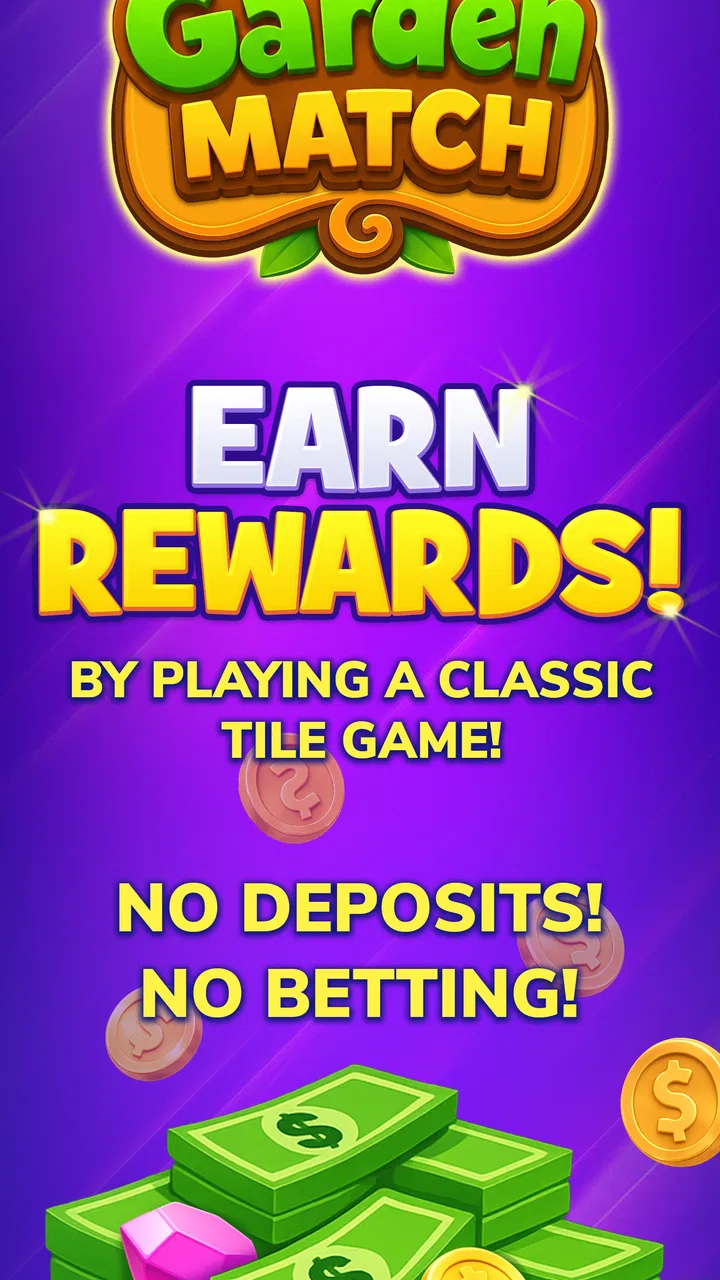
I spent time with Garden Match: Win Cash, a free puzzle game from Bear Hug Entertainment Limited that puts one idea at the center of the experience: matching tiles is tied to the possibility of earning real rewards. That promise changes how I look at an otherwise cosy board-clearing game. I am not only asking whether the moves feel satisfying; I am also asking whether the reward angle improves the session or makes the game feel more demanding than a usual casual puzzler.
My overall impression is that Garden Match works best when I treat it as a short, focused tile-matching break rather than as a guaranteed way to make money. The board-clearing loop is easy to understand, and the garden presentation gives the game a softer personality than many competitive puzzle apps. At the same time, the mature age rating is an important signal: this is not a game I would casually hand to a child, especially because real-reward language can encourage a more serious attitude toward play.
Why the real-reward capability changes the puzzle
The defining capability here is the connection between collecting tiles, clearing the board, and earning real rewards. In a standard matching game, a failed attempt usually costs little beyond time or a bit of patience. In Garden Match, the reward framing can make each decision feel more meaningful. I found myself looking more carefully at the available tiles instead of tapping quickly just to keep the board moving.
You May Also Like

 Pandora - Music & Podcasts
Pandora’s Music Is Easy to Start, but Harder to Recover
Pandora’s strength is its low-effort path from a seed to a station. Its weak spot is how much confidence it asks you to place in connection, setup, and quiet recovery.

 8 Ball Pool
 Is Built on Rivalries, Rematches, and Routine
A close look at the rivalries, rematches, shared routines, and unanswered safety questions that turn a quick pool match into a persistent mobile community.

 Samsung Music
’s Quiet Strength Is Playing What You Already Own
Its reach comes less from spectacle than from dependable access to a personal library. That simplicity is both the app’s strongest retention engine and its ceiling.

 AccuWeather: Weather Radar
AccuWeather Review: A Quick, Clear Forecast for Everyday Decisions
For everyday plans, the best forecast is the one you can understand quickly. AccuWeather makes rain timing, radar, and local conditions easy to act on, with a few trade-offs.

 Hill Climb Racing
Why Hill Climb Racing Still Turns Crashes Into One More Run
A tiny car, a bumpy hill and one more upgrade: Hill Climb Racing keeps resurfacing because its simple chaos makes every near-miss feel personal.

 AliExpress - Shopping App
AliExpress Makes Global Shopping Feel Personal, but Shoppers Bear the Risk
AliExpress turns a global marketplace into a pocket-sized discovery engine. Its reach is useful, its shopping loop compelling, and its trade-offs easy to miss.
More From Our News Desk
View All News


That extra attention can be a strength. It gives familiar matching actions a purpose, and it makes a short session feel more goal-oriented. A player who enjoys working toward a visible outcome may appreciate this more than an endless stream of decorative levels. The garden theme also helps keep the tone relaxed, so the game does not feel as severe as a purely competitive puzzle.
Still, the capability needs to be understood in practical terms. A reward-focused game should not be approached as dependable income. I would play it for the puzzle first and regard any reward as an additional possibility, not as compensation for time. That distinction matters because it prevents the experience from becoming frustrating when a board takes longer than expected or when progress does not feel immediate.
The game belongs to the puzzle category, but it occupies a slightly different space from a conventional match-three title. Instead of relying only on quick combinations or colourful chain reactions, its appeal comes from the relationship between tile collection, board clearing, and the reward objective. That makes the decision-making feel more deliberate, even when the basic controls remain approachable.
What I pay attention to during a board
My most useful habit was to pause before making the first move. In a relaxed matching game, it is tempting to choose the most obvious pair or group immediately. Here, I get better value from scanning the whole board, noticing which tiles are easiest to collect, and thinking about whether a move opens a more useful path. This is a small change, but it makes the reward-oriented goal feel less like luck and more like controlled puzzle play.
I also avoid treating every available match as equally valuable. A move that clears tiles now may leave an awkward arrangement afterward, while a less obvious choice can preserve options for the next sequence. That is the kind of trade-off that gives the game more staying power than a purely automatic tapping routine. It is not a complicated strategy system, but it rewards patience.
Another practical point is to separate entertainment time from reward expectations. I would set a clear stopping point before starting a session, particularly if I am playing during a break. Without that boundary, the promise of a real reward can tempt me to continue after the puzzle has stopped being enjoyable. The game is more pleasant when I remain in control of the session instead of chasing an outcome.
How the experience works in an everyday session
Imagine I have ten minutes before leaving for an appointment. Garden Match fits that kind of gap better than a game that requires a long uninterrupted run. I can open it, focus on a board, and use the tile-clearing objective as a compact mental reset. The garden setting supports that use because it feels calmer than a frantic arcade game, while the reward element gives the session a clear reason to continue.
On a longer evening session, my approach changes. I become more aware of repetition and of how much attention the reward goal demands. The first few boards can feel pleasantly absorbing, but the same loop may feel less fresh if I am expecting every session to produce something tangible. For me, the game works best in small portions, where the board remains the main attraction and the reward possibility stays in the background.
This is also where the game’s mature rating deserves attention. I would not describe it as a family puzzle choice simply because the visuals are cosy. Adults deciding whether to install it should consider the reward-oriented presentation and choose accordingly. If a young player wants a harmless tile game, a conventional puzzle without real-reward framing would be a more comfortable alternative.
The game is free to install, which lowers the barrier to trying it. I still recommend approaching that word carefully: free access does not automatically mean that every part of the experience will feel cost-free in terms of time, attention, or expectations. I would read any in-game instructions closely and make sure I understand how the reward objective works before investing serious time.
The strongest scenario: short, deliberate puzzle breaks
The best scenario for Garden Match is a player who enjoys quiet puzzle sessions but wants more purpose than simply beating a personal score. It suits someone who likes scanning a board, planning a few moves ahead, and stopping after a focused attempt. The real-reward capability gives those players an extra reason to care about accuracy, while the garden theme keeps the mood from becoming overly intense.
I can also see it working for someone who is tired of fast match-three games. Many familiar alternatives emphasize speed, cascading effects, or constant visual stimulation. Garden Match’s more measured tile-collection premise is better for a player who wants to think before tapping. The trade-off is that anyone looking for dramatic combos or rapid action may find it restrained.
It is less suitable for a player who wants a purely relaxing game with no financial or reward-related pressure. Even if the board itself is calming, the promise of real rewards can change the emotional texture of play. Someone who tends to keep going after a session stops being fun should probably choose a simpler offline-style puzzle instead.
I would also skip it if my main goal were a deep story, a large social community, or a complex strategic campaign. Garden Match is built around its puzzle activity and reward angle, not around a broad adventure structure. Choosing it for those other purposes would create the wrong expectations from the start.
Trade-offs behind the reward-focused design
The biggest advantage is motivation. A normal board-clearing game can become background entertainment, but the reward objective gives me a reason to examine my choices. That can make a short session feel more engaging and can encourage better planning. It is a meaningful difference, not just a decorative addition to the store description.
The biggest limitation is also motivation. When rewards become the reason I play, I may judge an ordinary puzzle board too harshly. A move that would feel satisfying in a traditional game can feel insufficient if I am measuring it only by progress toward an external outcome. The game therefore asks me to manage my own expectations as much as it asks me to solve the board.
There is a second trade-off between accessibility and depth. The basic idea is easy enough to grasp, but getting the most from each board requires restraint. Players who prefer immediate feedback may dislike spending time planning, while careful players may appreciate that the game does not reduce every decision to the fastest available tap.
The garden presentation is another part of that balance. It gives the game a gentler identity and makes it more inviting than a stark rewards interface would be. However, players who prefer a highly energetic visual style may find the atmosphere too subdued. I see the calm presentation as a good match for deliberate play, not as a universal advantage.
Because the game is rated Mature 17+, I would not ignore the context around the reward feature. Adults can make their own judgement, but the rating makes it clear that the app should not be treated as a child-friendly tile toy. For younger players, or for households that want to avoid reward-driven play entirely, another puzzle game would be the safer choice.
Tips that make the central loop more useful
Before the first move, scan for the easiest tile groups and the moves that preserve the most future choices. This reduces impulsive play and makes the board feel more like a puzzle than a reflex test.
Use short sessions when possible. A clear time boundary helps keep the reward objective from taking over the experience and makes it easier to judge whether the game is genuinely enjoyable.
Do not assume that the most immediate clearance is the best one. A move that leaves a better arrangement can be more valuable than a quick match, especially when the board is becoming crowded.
Keep reward expectations separate from personal enjoyment. If I would not play the board without the reward possibility, that is a useful sign to stop rather than continue automatically.
These habits are not complicated, but they address the main weakness of reward-centred puzzle play: it can encourage hurried decisions and longer sessions than intended. Garden Match is more enjoyable when I use the reward capability to sharpen my attention, not to pressure myself into playing.
How it compares with familiar puzzle alternatives
Compared with a classic match-three game, Garden Match feels less focused on rapid chains and more focused on collecting and clearing with a specific reward purpose. A match-three alternative is usually better if I want spectacular combinations, quick reactions, or a large variety of power-ups. Garden Match is more appealing when I want each move to support a direct board-clearing objective.
Compared with a purely relaxing tile game, it adds motivation but loses some innocence. A simple tile puzzle may be the better choice for winding down without thinking about outcomes beyond the board. Garden Match is better for players who enjoy a little extra tension and who can keep the possibility of rewards in perspective.
Compared with a deep strategy puzzle, it is easier to approach but not as intellectually broad. I would not choose it when I want elaborate systems, long-term planning, or a campaign that steadily introduces new strategic rules. Its strength is the compactness of the central loop, especially for short breaks.
The practical choice comes down to what I want from the session. If I want speed, spectacle, or a story, I would look elsewhere. If I want a cosy tile puzzle with a reward-oriented reason to plan carefully, Garden Match has a clear identity of its own.
Who gets the most from it
The game has built a solid audience, with an average rating of 4.6 from around seventeen thousand ratings and over fifty thousand installs. Those figures suggest that the basic concept is connecting with many players, but they do not remove the need to decide whether the reward-centred format suits me personally. Popularity is useful reassurance, not a substitute for matching the game to my habits.
I think the strongest audience is adults who like casual puzzles, prefer a gentler visual mood, and enjoy having a concrete objective beyond simply passing time. It is especially suitable for careful players who are willing to pause, inspect the board, and treat each move as part of a larger clearing plan.
It is a weaker fit for children, players who want a completely pressure-free experience, and anyone who is likely to equate play with reliable earnings. It is also not ideal for people who need a large, constantly changing puzzle system. The current version is 1 and requires an operating system version of 9 or later, so device compatibility is worth checking before installing.
Bear Hug Entertainment Limited has kept the concept easy to explain, but the real test is whether I enjoy the balance between cosy presentation and reward-driven attention. I would recommend trying it with modest expectations, using the free entry point to see whether the board-clearing loop holds my interest without relying on the reward promise.
My recommendation after using it
Garden Match is worth a look if I want a focused puzzle break and I am comfortable treating real rewards as a possible extra rather than the main reason to play. Its central capability genuinely changes the way I approach the board: I plan more carefully, notice the cost of careless moves, and feel that a successful clear has a clearer purpose.
That same capability is why I would not recommend it to everyone. The reward angle can add pressure, and the Mature 17+ rating means the game should be considered as an adult-oriented choice rather than a general family app. Players who want uncomplicated relaxation may be happier with a traditional tile game, while players seeking deeper strategy or fast action should choose a different puzzle style.
For the right person, though, the combination is appealing. I get a calm garden-themed setting, a straightforward tile-clearing activity, and an incentive that makes careful play feel more meaningful. My advice is to play in defined sessions, think before tapping, and judge the game by the quality of the puzzle experience first. With that mindset, Garden Match offers a distinctive take on casual matching without asking me to confuse entertainment with guaranteed financial value.
FAQs for Garden Match: Win Cash
01What is Garden Match: Win Cash?
Garden Match: Win Cash is a casual match-3 puzzle game built around garden-themed levels and reward-focused gameplay. You swap or match similar items to complete objectives, clear obstacles, and progress through stages. The game may also promote opportunities to earn cash or prizes, but these offers can depend on location, eligibility, available tournaments, and the developer’s current terms.
02Can you really win real money in Garden Match: Win Cash?
The game may include cash tournaments, promotional rewards, or other prize-based features, but winning money is not guaranteed. Results generally depend on your performance, the competition rules, and whether cash contests are available in your country. Before spending anything, review the entry requirements, prize conditions, withdrawal rules, and any applicable fees shown inside the app.
03Is Garden Match: Win Cash free to download and play?
Garden Match: Win Cash can generally be downloaded without an upfront purchase, allowing users to try the basic puzzle experience first. However, free games often contain advertisements, optional in-app purchases, or paid entries for certain competitions. Check the store listing and in-game payment screens carefully, especially if children use the device or purchases are protected by a shared account.
04How do withdrawals and rewards work in Garden Match: Win Cash?
Reward and withdrawal procedures can vary according to the version of the app, your region, and the type of promotion available. You may need to reach a minimum balance, verify your identity, or connect an approved payment method before requesting a payout. Processing times are not always immediate, so read the current terms in the app and keep realistic expectations.
05What should I check before installing Garden Match: Win Cash?
Before installing, check whether the app is officially available in your country and whether its cash features are supported in your region. Review the requested permissions, privacy policy, age requirements, advertising practices, and recent user feedback. Also confirm that your device has enough storage and that you understand the difference between ordinary gameplay rewards and guaranteed, withdrawable cash.
Pros
- Simple match-3 gameplay is easy to learn and play casually.
- Garden-themed visuals give the game a bright
- relaxing atmosphere.
- Short levels work well for quick gaming sessions.
- Progression and rewards can encourage regular play.
- Playable on mobile devices without requiring advanced gaming skills.
Cons
- Cash rewards may depend on eligibility
- region
- and withdrawal conditions.
- Frequent ads can interrupt gameplay
- especially between levels.
- Some rewards may require extended play or completing extra tasks.
- In-app purchases can make progression feel less rewarding without spending.
- Internet access may be needed for rewards
- events
- or account features.

Garden Match: Win Cash
Gallery